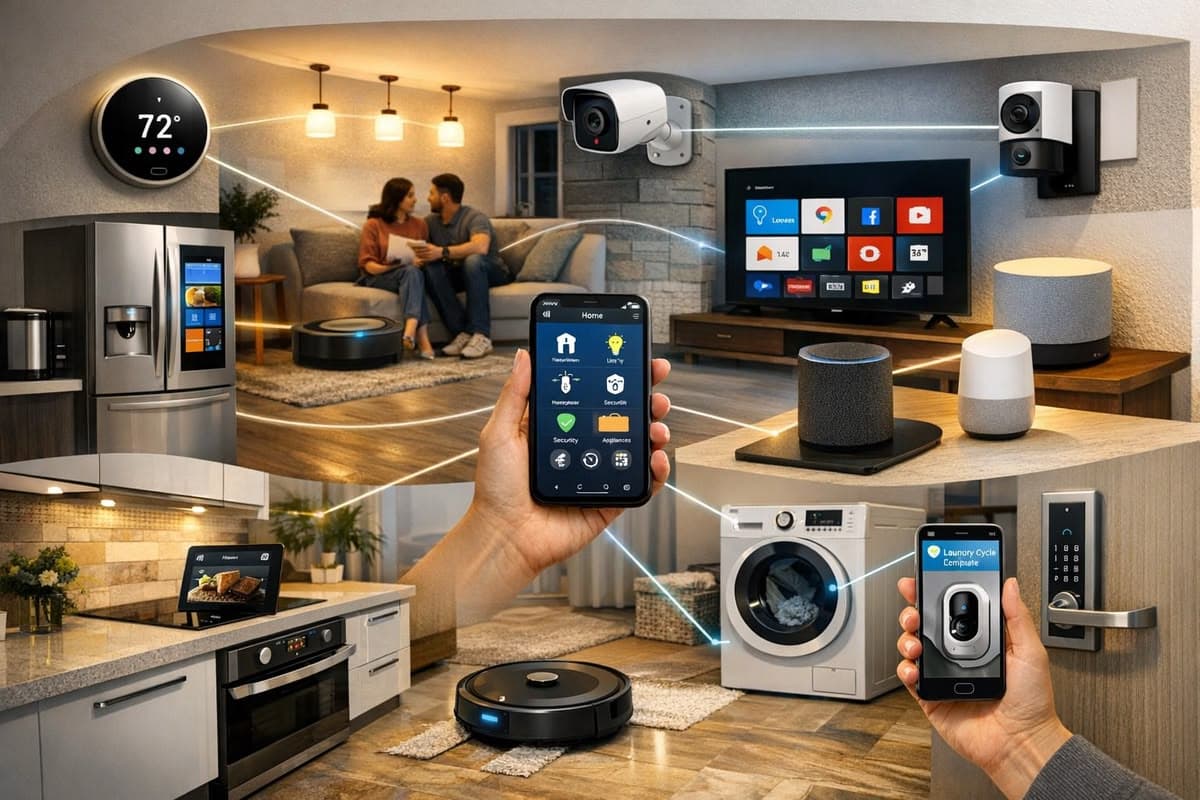
Smart home devices have become an important part of modern living. These devices use internet connectivity and advanced technology to automate household tasks and improve convenience, security, and energy efficiency. With the rapid growth of smart technology, many homes today are equipped with devices that can be controlled through smartphones, voice commands, or automated systems.
One of the most popular smart home devices is the smart speaker. Devices like Amazon Echo and Google Nest Mini allow users to control other smart devices using voice commands. These speakers are powered by virtual assistants that can play music, answer questions, set reminders, check the weather, and even control lights or appliances in the house.
Smart lighting systems are another widely used technology in smart homes. Smart bulbs and lighting systems allow homeowners to adjust brightness, change colors, and schedule lighting through mobile apps or voice assistants. These systems help save electricity because lights can automatically turn off when not in use. Many smart lights can also be controlled remotely, providing both convenience and energy efficiency.
Smart security devices have also become very popular among homeowners. Devices such as smart cameras, doorbell cameras, and motion sensors help improve home security. For example, the Ring Video Doorbell allows homeowners to see and communicate with visitors through their smartphones even when they are not at home. These systems send alerts when unusual activity is detected, helping families feel safer.
Another useful smart home innovation is the smart thermostat. Devices like the Google Nest Learning Thermostat can automatically adjust temperature settings based on the user’s habits. This helps maintain a comfortable home environment while reducing energy consumption and lowering electricity bills.
Smart appliances are also transforming everyday household activities. Refrigerators, washing machines, and robotic vacuum cleaners can now connect to the internet and be controlled remotely. These appliances often include advanced features such as automatic scheduling, energy monitoring, and maintenance alerts.
Despite their many benefits, smart home devices also raise concerns about privacy and data security. Since these devices collect and store user data, it is important for homeowners to use strong passwords, update software regularly, and choose reliable brands.
In conclusion, smart home devices are revolutionizing the way people manage their homes. By providing automation, convenience, and improved security, these technologies are making daily life easier and more efficient. As technology continues to advance, smart homes are expected to become even more common in the future.