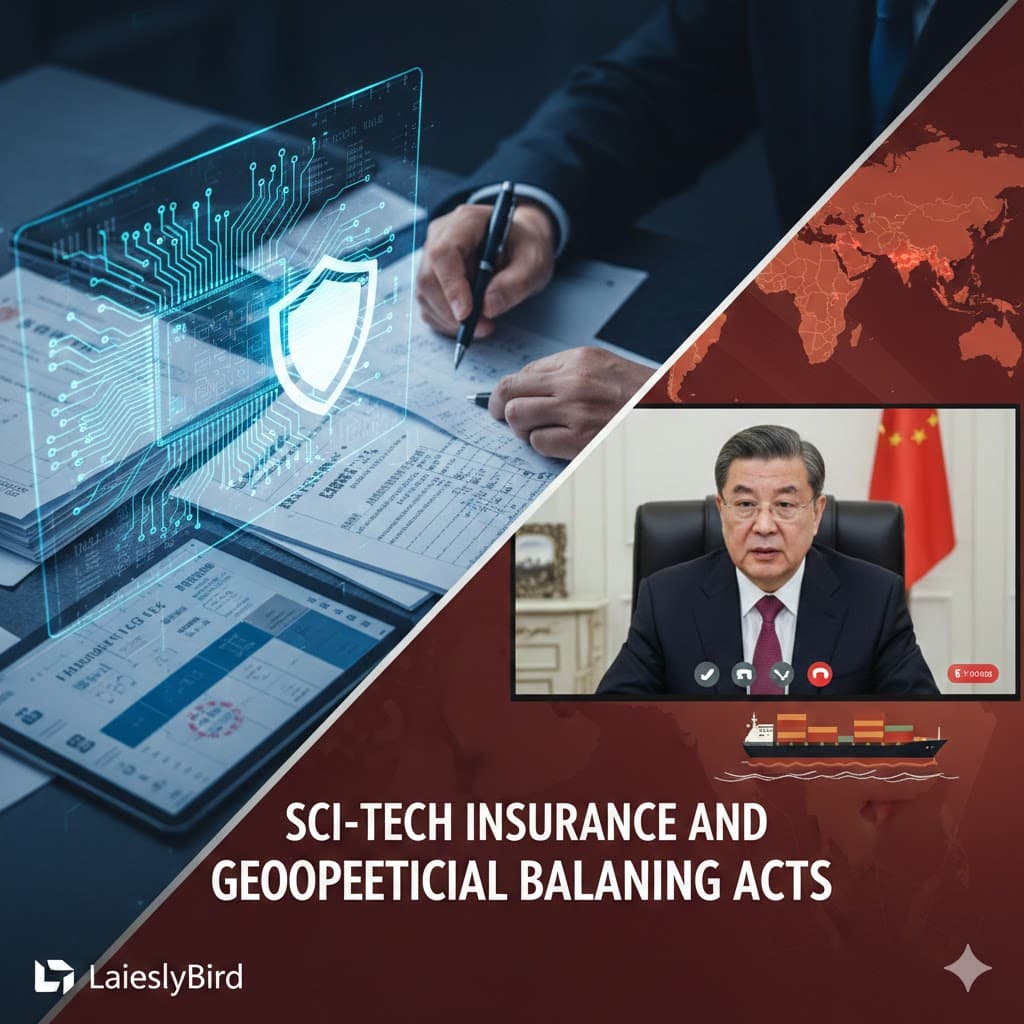
As the capital prepares for the opening of the Two Sessions this week, Monday, March 2, 2026, marked a decisive prelude to China’s next five-year roadmap. Amid heightened security and the conclusion of the 14th CPPCC Standing Committee session, Beijing delivered two unmistakable messages: a deeper commitment to technological self-reliance and a renewed push to position itself as a stabilizing force in a volatile global landscape.
Insuring the Future: The 8 Trillion Yuan Strategy
In a significant policy announcement, key ministries—including the Ministry of Science and Technology of the People's Republic of China and the National Financial Regulatory Administration—released new guidelines to accelerate the development of sci-tech insurance. The objective is to create a financial safety net for high-risk, high-investment sectors such as semiconductors, artificial intelligence, and aerospace.
The timing aligns closely with the upcoming 15th Five-Year Plan (2026–2030). In 2025 alone, sci-tech insurance reportedly provided around 8 trillion yuan ($1.16 trillion) in coverage. The newly introduced 20-point framework seeks to ease access for small and medium-sized tech enterprises, recognizing that innovation often involves long development cycles and significant capital exposure. By strengthening risk protection mechanisms, Beijing aims to sustain momentum in strategic industries amid ongoing global technology restrictions.