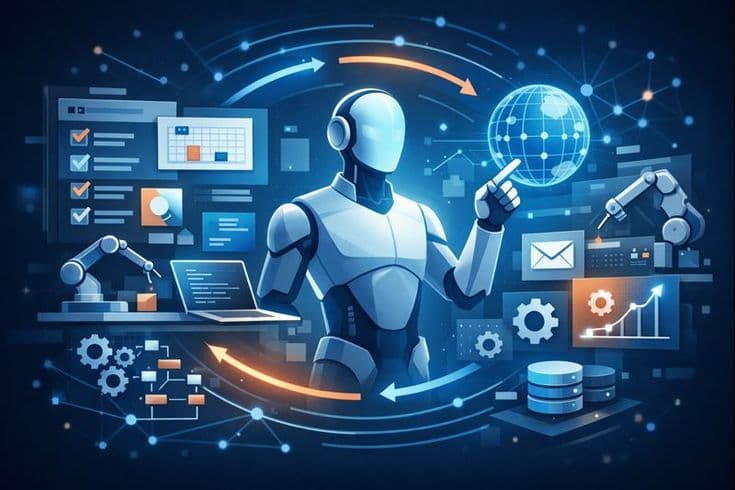
Artificial Intelligence (AI) is transforming the way businesses operate, and one of the most exciting developments in this field is the rise of AI agents. AI agents are intelligent software programs that can perform tasks, make decisions, and interact with users or systems with minimal human intervention. Unlike traditional software that simply follows fixed instructions, AI agents can learn from data, adapt to new situations, and complete complex tasks automatically.
An AI agent works by collecting information from its environment, analyzing that data, and taking appropriate actions to achieve specific goals. These agents are powered by advanced technologies such as machine learning, natural language processing, and automation tools. Because of these capabilities, AI agents are becoming valuable digital assistants for many organizations.
One of the major ways AI agents are changing businesses is through automation. Companies often deal with repetitive tasks such as responding to customer inquiries, scheduling appointments, processing orders, and managing data. AI agents can handle these tasks quickly and accurately, allowing employees to focus on more strategic and creative work. This not only improves productivity but also reduces operational costs.
AI agents are also transforming customer service. Many businesses now use AI-powered chatbots and virtual assistants to interact with customers on websites, mobile apps, and social media platforms. These agents can answer frequently asked questions, guide customers through purchasing processes, and provide instant support 24 hours a day. As a result, businesses can offer faster responses and improve customer satisfaction.
Another important area where AI agents are making a difference is data analysis and decision-making. Businesses generate massive amounts of data every day, and analyzing this information manually can be difficult and time-consuming. AI agents can quickly process large datasets, identify patterns, and provide insights that help managers make better decisions. For example, they can predict market trends, analyze customer behavior, and recommend marketing strategies.
AI agents are also improving marketing and sales strategies. By analyzing user preferences and browsing behavior, these agents can personalize product recommendations, create targeted advertising campaigns, and optimize marketing performance. This helps businesses reach the right customers with the right message at the right time.
Despite their many advantages, businesses must use AI agents responsibly. Companies need to ensure data privacy, maintain transparency, and combine AI capabilities with human oversight to avoid potential risks.
In conclusion, AI agents are becoming powerful tools that are reshaping modern business operations. By automating tasks, improving customer service, analyzing data, and enhancing marketing strategies, AI agents help organizations become more efficient and competitive in today’s digital economy. As technology continues to evolve, the role of AI agents in business is expected to grow even further.